What Is an Espresso Blend? How Roasters Build One
An espresso blend combines several coffees into one, and roasters who want a balanced shot often blend single origins rather than relying on one coffee. Espresso itself is a drink named after the way it's brewed, not a bean or a roast.
If you've ever stood in front of a shelf wondering whether "espresso" on a bag means something special, this is for you. Here's what goes into a blend, why roasters bother, where robusta fits, and how to choose one for your mornings.
First, Espresso Is a Drink, Not a Bean
The name trips a lot of people up, so let's clear it first. The National Coffee Association puts it plainly: espresso is not a type of coffee bean or a roast. It's a coffee drink named after the method used to brew it.
That method uses high pressure to force nearly boiling water through finely ground coffee in about 20–30 seconds. The result is denser and more concentrated than brewed coffee, which is why it tastes stronger.
Espresso can be made with various beans and roast levels, despite the widespread myth that it has to be dark roast. So which coffees should you brew this way? That's where blending comes in.
Why Roasters Blend Coffees for Espresso
If plenty of coffees can make espresso, why blend at all? The reasons come down to balance, consistency and milk.
Balance and complexity
Roasters who want a balanced espresso will often combine several single-origin beans into one blend. The Coffee Research Institute goes further, arguing that blending is necessary for espresso because a single origin will lack the complexity desired.
The same institute sums up the goal neatly: the whole must be greater than the sum of the parts, and there are no clear rules for getting there.
The same cup all year
Coffee is a crop, and crops have seasons. Blends let a roaster keep a consistent flavor through the year without being tied to one origin. As Perfect Daily Grind notes, drawing on Verona roaster Davide Cobelli, many single origins change seasonally, while a blend lets a roaster hold the same profile for longer.
Built to cut through milk
Espresso is the base for cappuccinos, lattes and americanos, so your shot may well end up sharing the cup with milk or water. Melbourne roaster Joe Molloy describes what he's after as "a full-bodied, reliable coffee that punches through the milk and still tastes great black." If cappuccino is your daily drink, our guide to making the perfect cappuccino at home picks up from here.
Blending hasn't always had such good motives. In the past, some roasters blended to hide small amounts of badly roasted or low-quality coffee, or to bulk out volume. That's why it pays to buy from a roaster who tells you what's in the bag.

What Goes Into an Espresso Blend
There's no single recipe, but the Coffee Research Institute describes a common shape: a mild base, then smaller amounts of coffees chosen for a particular job.
| Component | Example origins | What it adds |
|---|---|---|
| Base | Brazil, Mexico, Peru | Body and sweetness without an overbearing flavor |
| Acidity | Colombia, Costa Rica, Guatemala | Body, acidity and flavor, used in small amounts |
| Brightness | Ethiopia (Harrar), Kenya | Complexity and brightness |
| Richness | Sumatra, Sulawesi, Java | Richness and body |
| Robusta (optional) | Varies | Crema, caffeine and "bite" |
Brazil earns its place as the base for a reason. Hamburg roaster Jan-cort Hoban starts with a Brazilian coffee for "the body and chocolate tones that people love." Coffees from Colombia, Costa Rica and Guatemala are often very acidic, so they're used sparingly.
Brightness comes from further afield. Ethiopian Harrar and Kenyan coffees are added for complexity and brightness, and Kenyan coffee in particular adds a powerful brightness. Our African Espresso draws on the same part of the world: a medium/dark roast of Arabica from Kenya, Tanzania and Ethiopia, full-bodied with subtle floral and fruity notes.
How many coffees? Roasters disagree
There's no fixed number. Hoban uses two or three coffees, never more, while Cobelli uses six to ten. Hoban's reasoning is practical: with too many coffees, the chance that every one lands in a 20g espresso dose is "low to none."
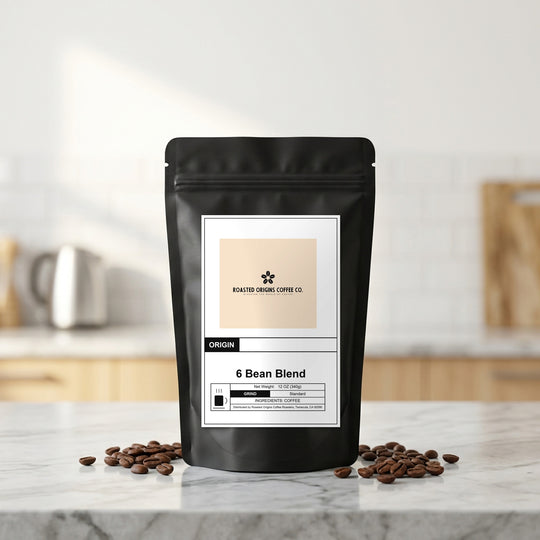
Our 6 Bean Blend is in Cobelli's camp: a dark roast of six coffees from around the world, full-bodied and well suited to espresso.
How the coffees are roasted matters too. The Coffee Research Institute says it's usually preferred to roast each coffee separately to its own peak and then blend.
Where Robusta Fits
Not every espresso blend is all arabica. Fine robusta is often added to bump up crema and caffeine and to add a little "bite." Good-quality robusta is used in traditional Italian espresso blends for a full-bodied taste and better crema.
It's no niche bean, either. Robusta makes up around 45% of global coffee production and has almost double the caffeine of arabica.
The trade-off is flavor. Robusta tends to have lower acidity, more bitterness and a more woody, less fruity taste than arabica. In a blend, that powerful flavor can be exactly the point, giving the cup a sense of "strength" and "finish."
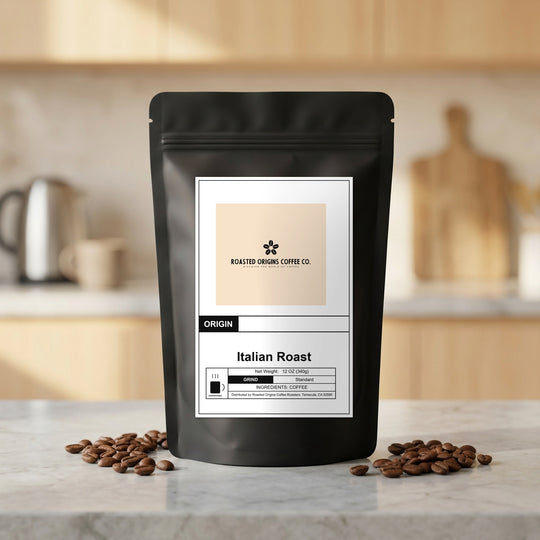
If that's your style, our Italian Roast is our darkest roast, a blend of Arabica and Robusta with a bold, smoky flavor. For how it compares with the other classic dark roast, see French Roast vs Italian Roast.
Espresso Blend vs Single Origin: Which Should You Buy?
With the components in mind, choosing comes down to how you drink your coffee. The NCA notes that a variety of roasts work for espresso, but coffee roasted specifically for it will best bring out its characteristics.
- Mostly milk drinks: be wary of very light roasts. A light roast can highlight a blend's acidity and complexity, but its subtler qualities may disappear in milk.
- Mostly straight shots: a light roast's acidity and complexity won't have milk to compete with.
- You want it the same every time: a blend, since blends let a roaster hold one profile for longer.
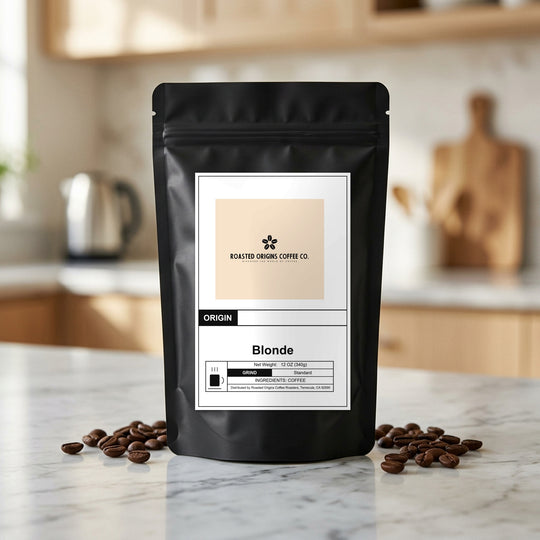
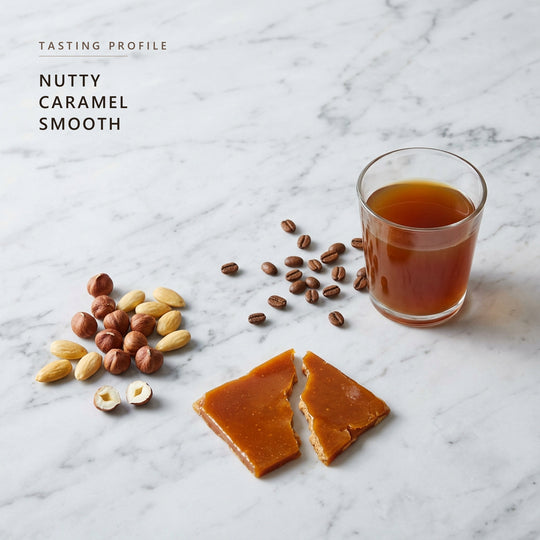
Dark isn't the only option. Our Blonde combines beans from Central America and Africa for a sweet espresso, smooth and mild with nutty, caramel sweetness.
Pulling a Good Shot From Your Blend
A great blend still needs a decent recipe, and the basics are simple. The NCA recommends a fine grind, like table salt. Its ratio is 1 gram of dry coffee to 2 grams of brewed espresso, or 1:2. In other words, the shot in your cup should weigh about twice what your dry coffee weighed.
Then taste and adjust. If your shot tastes bitter or sour, it may be ground too fine, so go coarser. If it tastes flat or watery, it may be too coarse, so go finer.
Look for the crema too. It's the velvety, golden-brown layer on top of the shot. It forms from emulsified oils in the ground coffee, and you won't see it with any other brewing method.

FAQ
Is espresso a type of bean or roast?
No. The National Coffee Association says espresso is not a type of coffee bean or a roast. It's a drink named after the brewing method, which forces nearly boiling water through finely ground coffee under high pressure.
Does an espresso blend have to be a dark roast?
No. Espresso can be made with various beans and roast levels. A light roast can highlight a blend's acidity and complexity, though its subtler qualities may get lost in milk.
Why do some espresso blends contain robusta?
Fine robusta is often added to boost crema and caffeine and to add bite. Good-quality robusta is used in traditional Italian espresso blends for a full-bodied taste and better crema.
Does espresso have more caffeine than drip coffee?
Per ounce, yes. The NCA, citing USDA data, says a 1-ounce shot typically has 63 mg of caffeine, while brewed coffee has 12 to 16 mg per ounce. Total caffeine still depends on how much you drink.
Ready to try one? Start with our African Espresso, a full-bodied medium/dark roast of Kenyan, Tanzanian and Ethiopian Arabica with subtle floral and fruity notes. It's available ground for espresso or as whole beans.